Overview
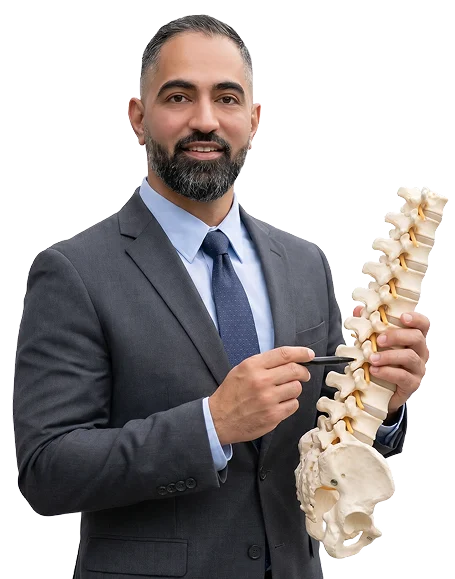
Headache treatment with Dr Jawaad Malik focuses on head pain that starts in the neck or in the occipital nerves at the back of the head, which is often mistaken for tension headache or migraine. A Consultant in Pain Medicine, he looks for the source, offers image-guided nerve blocks where suitable and works alongside GPs and neurologists, with clinics in Windsor, Woking, Chertsey, Guildford and Wexham.
| Question | Answer |
|---|---|
| Which headaches are assessed? | Cervicogenic headache, occipital neuralgia, chronic migraine, tension-type, post-traumatic and medication overuse headache |
| Who will I see? | Dr Jawaad Malik, Consultant in Pain Medicine and Anaesthesia |
| Which procedures are offered? | Occipital nerve blocks, cervical facet joint injections, botulinum toxin type A for chronic migraine and trigger point injections |
| Does he work with neurologists? | Yes, care is coordinated with neurology colleagues when needed |
| Where are appointments? | Windsor, Woking, Chertsey, Guildford and Wexham |
What Is Interventional Headache Treatment?
Most headaches go away on their own and are not serious. A few keep returning because they start in structures a pain doctor can reach with a fine needle: the upper neck joints and the occipital nerves at the back of the head.
Dr Malik’s work centres on these headaches. Preventive medicines for migraine are usually led by your GP or a neurologist, and he coordinates with neurology colleagues where that helps.
Which Headache Warning Signs Need Emergency Care?
| Headache warning sign | Possible cause | Where to go now |
|---|---|---|
| A sudden, extremely painful headache that does not go away (thunderclap headache) | Bleeding on the brain (subarachnoid haemorrhage) | Call 999 |
| Face drooping, weakness in one arm or slurred speech | Stroke | Call 999 |
| Very painful headache with a high temperature, stiff neck, dislike of bright light or a rash that does not fade when pressed | Meningitis | Call 999 or go to A&E |
| Headache after a head injury in the last 3 months, or with a seizure, confusion or drowsiness | Needs emergency assessment | Call 999 or go to A&E |
| Severe headache with jaw pain when eating, blurred or double vision or a sore scalp | Possible temporal arteritis | Urgent GP appointment or NHS 111 |
| Headache made worse by coughing, sneezing or bending, or with vomiting | Needs prompt review | Urgent GP appointment or NHS 111 |
Never drive yourself to hospital. The NHS guidance on headaches gives the full list.
Headache Types Dr Malik Assesses and Treats
- Cervicogenic headache: pain referred from the upper neck joints; see neck pain treatment.
- Occipital neuralgia: irritated greater or lesser occipital nerves.
- Chronic migraine and chronic tension-type headache: preventive medicines and lifestyle changes come first.
- Medication overuse headache: painkillers taken too often; any reduction is planned with your GP.
- Post-traumatic headache: after whiplash or a head injury, once emergencies are ruled out.
- Cluster headache: attack treatment is usually arranged through your GP or a neurologist.
- Trigeminal neuralgia: an anticonvulsant medicine is usually tried first; see neuropathic pain treatment.
Neck or Migraine? Telling Headache Sources Apart
The type of headache decides who leads your care.
| Headache type | Typical features | Who usually leads care | Where a pain procedure may fit |
|---|---|---|---|
| Cervicogenic headache | Starts at the back of the neck, often with neck stiffness | Pain medicine, with physiotherapy | Facet joint injection or medial branch block |
| Occipital neuralgia | Pain over the back of the head along the occipital nerves | Pain medicine | Occipital nerve block |
| Chronic migraine | Headache on 15 or more days a month, at least 8 with migraine | GP and neurology | Botulinum toxin type A if NICE criteria are met |
| Tension-type headache | Pressing pain on both sides; daily activities still possible | GP and self-care | Occasionally trigger point injections, after discussion |
| Cluster headache | Severe one-sided pain around the eye lasting 15 minutes to 3 hours | GP and neurology | Specialist advice rather than routine injections |
| Medication overuse headache | Frequent headaches linked to regular painkiller use | GP, with a planned reduction | Medicines reviewed first |
Headache Treatment Options: Nerve Blocks, Injections and Medicines
Injections sit alongside the basics, not instead of them: a headache diary, regular meals and sleep, less caffeine and painkillers on no more than 2 days a week.
Greater and Lesser Occipital Nerve Blocks
Local anaesthetic, sometimes with steroid, is placed around the occipital nerves under ultrasound. Relief helps confirm the diagnosis, and a helpful block can be repeated; the nerve block injections page covers the technique.
Cervical Facet Joint Injections and Medial Branch Blocks
For cervicogenic headache, injecting or numbing the upper neck facet joints can show whether they drive the pain and may ease it; see facet joint injections.
Botulinum Toxin Type A for Chronic Migraine
NICE TA260 recommends it for adults with chronic migraine only when at least 3 preventive medicines have not worked or were unsuitable and medication overuse has been managed. It should stop if headache days fall by less than 30% after 2 treatment cycles.
It is a prescription-only medicine, and Dr Malik checks whether you meet these criteria at assessment.
Trigger Point Injections for Neck and Shoulder Muscles
These target tender muscle knots in the neck and shoulders. NICE guideline NG193, which follows ICD-11 in grouping chronic primary headache with chronic primary pain, advises against starting trigger point injections for it, so they are only considered after discussion; see myofascial pain treatment.
Medicines, Physiotherapy and Psychological Support
Preventive medicines (beta blockers, some antidepressants, epilepsy medicines), acupuncture, relaxation and cognitive behavioural therapy (CBT) come through your GP or neurologist. Physiotherapy helps when the neck is involved.
Why People See Dr Malik About Persistent Headaches
- A focus on neck and nerve headaches: cervicogenic headache and occipital neuralgia are central to his practice.
- Ultrasound-guided blocks: he is a Certified Interventional Pain Sonologist (CIPS, World Institute of Pain).
- Joined-up care: he works with your GP and neurology colleagues rather than replacing them.
- NHS posts: Consultant in Pain Medicine and Anaesthesia at Ashford and St Peter’s Hospitals, and Honorary Consultant in Pain Management at St George’s, London.
- Reviews and languages: verified Doctify reviews; English, Hindi, Urdu or Punjabi spoken.
- Recognised expertise:
- Fellow of the Faculty of Pain Medicine (FFPMRCA) and of the Royal College of Anaesthetists (FRCA); European Diploma in Regional Anaesthesia (EDRA)
- Pain medicine fellowships at Charing Cross Hospital (including complex pain) and Imperial
Your First Headache Appointment: What to Expect
- Bring a headache diary: dates, triggers and painkiller use.
- History: frequency, character, triggers and past treatments.
- Examination: a neurological and neck examination to look for the source.
- Scans where indicated: MRI of the brain or neck is reviewed if you have one or need one.
- A diagnostic block if appropriate: to test whether a nerve or neck joint is responsible.
- A shared plan: written to your GP, with neurology involved if needed.
Allow around 30 minutes for the first visit; follow-ups are usually 15 minutes. Benefits, risks and alternatives are explained, including medicines alone or no injection.
After a Nerve Block: Recovery, Side Effects and Follow-Up
Tell the team beforehand about blood thinners, diabetes, allergies, infection or pregnancy, and arrange a lift, as you should not drive yourself home.
Take it easy for the rest of the day and avoid heavy work for a few days; our guide on how long local anaesthesia lasts explains the numb feeling.
Keep your headache diary going so the response can be judged at follow-up.
- Short-lived: discomfort at the site for a few days, bruising, facial flushing and dizziness.
- Steroid-related: raised blood sugar in diabetes, to be monitored for up to 1 month, and thinning or lightening of the skin at the site.
- Rare: infection, bleeding, nerve damage or a severe allergic reaction.
- No effect: the block may not reduce your headaches.
- Botulinum toxin: its specific side effects are explained before any treatment.
Headache Clinics in Windsor, Woking, Chertsey, Guildford and Wexham
Evening sessions run in Windsor and Woking.
| Clinic | Where to find it | Dr Malik’s sessions |
|---|---|---|
| The Princess Margaret Hospital, Windsor | Osborne Road, Windsor SL4 3SJ | Tuesdays 8am to 12pm, Thursdays 6.45pm to 8pm, Saturdays 9am to 12pm |
| Nuffield Health Woking Hospital, Woking | Shores Road, Woking GU21 4BY | Mondays 2pm to 6pm, Wednesdays 6.45pm to 8pm, Saturdays 9am to 1pm |
| Spire Thames Valley Hospital, Wexham | Wexham Street, Wexham, Buckinghamshire SL3 6NH | Mondays 9am to 6pm |
| The Runnymede Hospital, Chertsey | Guildford Road, Chertsey KT16 0RQ | Tuesdays 2pm to 5.30pm |
| Mount Alvernia Hospital, Guildford | Harvey Road, Guildford GU1 3LX | One Thursday each month, 2pm to 8pm |
Nerve blocks are day cases; the team tells you which hospital hosts yours. Maps are on the clinic locations page. When the practice is closed, NHS 111 can advise; dial 999 in an emergency.
Paying for Headache Treatment: Fees and Insurance
No fixed prices are listed online; each 2026 fee is quoted in writing before your appointment.
| What you pay for | How the fee is given |
|---|---|
| Headache consultation | Confirmed before you book |
| Review appointment | Confirmed before you book |
| Occipital nerve block or facet injection | Quoted with the hospital fee once recommended |
| Botulinum toxin for chronic migraine | Quoted if you meet the NICE criteria |
- Self-funding: book directly; no referral letter is needed.
- Insured: Dr Malik is recognised by most major private medical insurers; ask yours what is covered and whether a GP referral is required.
FAQs: Headaches, Occipital Nerve Blocks and Migraine
What is a cervicogenic headache?
Head pain coming from a problem in the neck, such as the upper neck joints. It often starts at the back of the head with neck stiffness and can be mistaken for migraine.
What is occipital neuralgia and how is it treated?
Irritation of the occipital nerves that run from the top of the neck over the back of the head. If simple measures fail, an ultrasound-guided occipital nerve block may ease it and confirm the diagnosis.
How long does an occipital nerve block last?
It varies. NHS pain services report relief lasting weeks, months or occasionally longer, while some people get little benefit. A helpful block can be repeated.
Does an occipital nerve block hurt?
You will feel it: the local anaesthetic usually feels warm and tingly as it starts to work, then numbs the area. Tenderness at the site normally fades within 24 to 48 hours.
Is my headache coming from my neck?
Possibly, if pain starts at the back of the neck or head with neck stiffness. A neck examination, and sometimes a diagnostic block, can confirm it.
Should I see a pain specialist or a neurologist for headaches?
Neurologists lead medicine-based care of most primary headaches, including migraine. A pain specialist helps when a neck or nerve source is suspected, and the two often work together.
Can botulinum toxin injections help chronic migraine?
For some adults, yes. NICE recommends them when at least 3 preventive medicines have failed or were unsuitable and medication overuse has been dealt with.
What are the side effects of nerve blocks for headache?
Most are minor, such as soreness, bruising or flushing; steroid can raise blood sugar. Infection, bleeding, nerve damage and allergic reactions are rare but possible.
When is a headache an emergency?
Call 999 for a sudden, extremely painful headache, signs of a stroke such as a drooping face or slurred speech, symptoms of meningitis, or a headache after a recent head injury with confusion or drowsiness.
Do I need a referral or a scan before my appointment?
Neither is essential if you pay yourself, though insurers may need a GP referral. Bring any MRI or CT reports and your current medicines list.