Overview
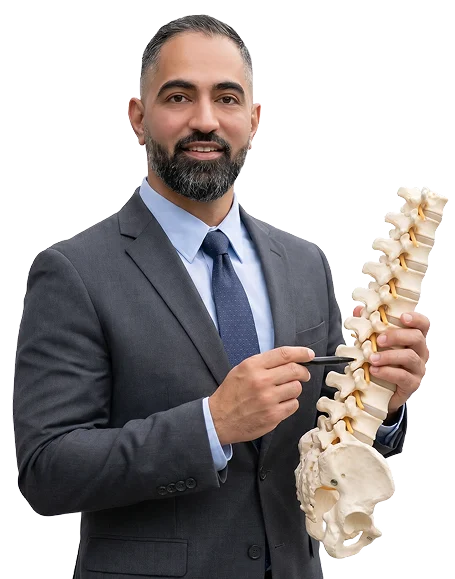
Pain management injections deliver a small dose of medicine, usually a local anaesthetic, a corticosteroid or both, to the spot where pain starts, with ultrasound or X-ray guiding the needle. Dr Jawaad Malik, Consultant in Pain Medicine and a Certified Interventional Pain Sonologist, assesses and gives interventional injections for spine, joint, nerve and soft-tissue pain in Windsor, Woking, Wexham, Chertsey and Guildford.
| Question | Answer |
|---|---|
| What do they treat? | Back, neck, joint, nerve and soft-tissue pain that simpler care has not settled |
| How is the needle placed? | Real-time ultrasound or X-ray (fluoroscopy) |
| Will I be awake? | Yes; the skin is numbed with local anaesthetic beforehand |
| How long am I in hospital? | A day case; most people leave within about 30 minutes |
| Who gives the injection? | Dr Malik himself, from assessment to follow-up |
| Where? | Five private hospitals in Berkshire, Buckinghamshire and Surrey |
What Are Interventional Pain Injections?
Interventional pain medicine adds targeted procedures to medicines and exercise. An injection places medicine at one structure, such as a facet joint, a nerve root or a bursa (a small fluid-filled cushion beside a joint). Local anaesthetic stops nerves sending pain signals for a few hours; a corticosteroid calms inflammation more slowly.
Some injections are diagnostic: if numbing one structure briefly removes your usual pain, it is the likely source. Others aim for longer relief. Either way, an injection eases symptoms rather than removing their cause, so it sits within a plan that includes exercise and physiotherapy.
Warning Signs That Need Urgent Help Before Any Injection
| Your symptom | Possible cause | What to do |
|---|---|---|
| Back pain with numbness around the genitals or bottom, or new bladder or bowel problems | A serious back problem needing hospital treatment | Call 999 or go to A&E |
| Pain, tingling, weakness or numbness in both legs | The same kind of serious back problem | Call 999 or go to A&E |
| Back pain with chest pain | A cause needing emergency assessment | Call 999 |
| Back pain while feeling hot, shivery or generally unwell | Possible infection | Urgent GP appointment or NHS 111 |
| Swollen lips, tongue or throat, or difficulty breathing, minutes after an injection | Anaphylaxis (severe allergic reaction) | Call 999 |
These signs come from the NHS back pain guidance and the NHS anaphylaxis page. Ask someone to take you or call an ambulance rather than driving to A&E.
Conditions Treated With Interventional Injections
- Spinal pain: lower back, mid-back and neck pain from facet joints or discs; see back pain treatment.
- Sciatica and arm pain: radiculopathy, meaning pain that travels along an irritated nerve root.
- Sacroiliac joint pain: low back or buttock pain from the joint linking spine and pelvis, covered under sacroiliac joint pain.
- Joint pain: knee, hip, shoulder, elbow and wrist, including arthritis.
- Tendon and bursa problems: tendinopathy and bursitis.
- Muscle trigger points: tender knots within a muscle, part of myofascial pain.
- Pain after surgery: persistent pain near a scar or along an affected nerve.
Ultrasound or X-ray: How Dr Malik Guides Each Needle
- Ultrasound: high-frequency sound waves, so no radiation. It shows nerves, tendons and blood vessels, which suits joint, tendon, bursa and peripheral nerve injections.
- X-ray (fluoroscopy): shows bone clearly, so it is used for spinal targets such as facet joints and nerve roots, with a small dose of radiation.
Dr Malik holds the CIPS qualification (Certified Interventional Pain Sonologist) from the World Institute of Pain and teaches ultrasound in interventional pain medicine. He explains his choice of method at your consultation.
Who Is Suitable for a Pain Injection, and What Else Could Help?
An injection may suit you when assessment points to a clear source and exercise, physiotherapy or medicines have not been enough. It may be postponed or not advised if you:
- have an infection or are taking antibiotics
- take blood-thinning medicine or bleed easily
- are pregnant or might be
- have diabetes that is hard to control, as steroid raises blood sugar for a few days
Alternatives include an exercise or physiotherapy programme, anti-inflammatory or nerve pain medicines, psychological support for long-term pain and a surgical opinion. Choosing no injection is always an option.
Treatment Options: Types of Pain Management Injections
Each summary covers what it is, who it may help and NICE’s view.
Epidural Steroid Injections
Local anaesthetic and steroid around the spinal nerves, mainly for sciatica. NICE suggests considering one for acute and severe sciatica. More on epidural injections.
Facet Joint and Medial Branch Injections
Injections beside the small joints at the back of the spine. NICE supports radiofrequency denervation for selected people after a positive diagnostic medial branch block. See facet joint injections.
Nerve Block Injections
Local anaesthetic, sometimes with steroid, beside a named nerve such as the occipital or genicular nerve, to confirm or ease nerve pain. The nerve block injections page lists each type.
Joint and Soft-Tissue Steroid Injections
Corticosteroid into a joint, bursa or tendon sheath. For osteoarthritis, NICE says to consider one when other medicines are unsuitable or to support exercise, explaining that relief lasts around 2 to 10 weeks. Read about steroid injections.
Hyaluronic Acid and PRP Injections
NICE does not recommend hyaluronic acid injections for osteoarthritis, and suggests the efficacy evidence for platelet-rich plasma (PRP) in knee osteoarthritis limited in quality. The regenerative orthopaedics page explains more.
Trigger Point and Bursa Injections
Small injections into a tender muscle knot or an inflamed bursa. For chronic primary pain, NICE advises against starting corticosteroid or local anaesthetic trigger point injections, so suitability depends on the cause.
Why Patients Choose Dr Malik for Image-Guided Injections
- Assessment before any needle: he examines you, reviews your scans and suggests an injection only when it fits the diagnosis.
- One consultant throughout: the doctor who assesses you gives the injection and reviews how it worked.
- Ultrasound skills: CIPS certification, and he teaches guided pain procedures to other doctors.
- Prompt access: appointments are frequently available within a few days of enquiring.
- Patient feedback: verified patient reviews on Doctify.
- Recognised expertise:
- FFPMRCA, FRCA, EDRA and CIPS
- Pain medicine and anaesthesia consultant in the NHS at Ashford and St Peter’s, and honorary pain management consultant at St George’s, London
Meet Dr Jawaad Malik, Who Gives Your Injection
Dr Malik has been an NHS consultant at Ashford and St Peter’s Hospitals since 2022, after clinical fellowships in pain medicine at Charing Cross Hospital and Imperial. His conference work includes developing a multidisciplinary neuromodulation and neuroablative service for cancer pain at the Royal Marsden Hospital. He teaches radiofrequency and regional anaesthesia courses, works to the biopsychosocial model and consults in English, Hindi, Urdu and Punjabi.
What Happens on the Day of Your Injection
- Consent: Dr Malik checks your medicines, explains benefits, risks and alternatives, and asks for written consent.
- Positioning: you lie or sit comfortably and the skin is cleaned with antiseptic.
- Numbing: local anaesthetic numbs the skin; expect pressure or brief discomfort while awake.
- Guided injection: ultrasound or X-ray confirms the needle position first.
- Going home: after a short rest, someone should drive you, as numbness can affect driving.
Dr Malik confirms the hospital where your procedure will take place when you book.
Recovery, Side Effects and Risks
Soreness usually settles within 24 to 48 hours, and many people return to light activities the same day or the next. Steroid acts over about a week. Relief may last weeks, months or longer, or may not come at all; Dr Malik will discuss what to expect.
- Common and short-lived: a pain flare for a few days, bruising, temporary numbness and facial flushing after steroid.
- Steroid effects: higher blood sugar for a few days in diabetes and temporary changes to periods.
- Rare but serious: infection, bleeding, nerve damage and anaphylaxis.
- Spinal injections: rarely, puncture of the layer beneath the epidural space causes a headache.
- Chest wall and shoulder blocks: a small risk of a punctured lung.
Where Dr Malik Performs Injections Across Windsor, Woking, Wexham, Chertsey and Guildford
Dr Malik holds clinics at five private hospitals in three counties.
| Hospital | Address | Clinic times |
|---|---|---|
| The Princess Margaret Hospital, Windsor | Osborne Road, Windsor SL4 3SJ | Tue 8am–12pm · Thu 6:45–8pm · Sat 9am–12pm |
| Nuffield Health Woking Hospital | Shores Road, Woking GU21 4BY | Mon 2–6pm · Wed 6:45–8pm · Sat 9am–1pm |
| Spire Thames Valley Hospital | Wexham Street, Wexham, Bucks SL3 6NH | Mon 9am–6pm |
| The Runnymede Hospital, Chertsey | Guildford Road, Chertsey KT16 0RQ | Tue 2–5:30pm |
| Mount Alvernia Hospital, Guildford | Harvey Road, Guildford GU1 3LX | Thu 2–8pm, monthly |
If pain becomes severe outside these hours, call NHS 111; in an emergency, dial 999.
Fees and Insurance for Pain Injections
The total depends on the injection, imaging and hospital, so your 2026 fees are confirmed in writing before you book.
| Item | Fee |
|---|---|
| New patient consultation | Quoted when you book |
| Follow-up appointment | Quoted when you book |
| Injection, with imaging and hospital charges | Quoted after assessment |
- Self-pay: no GP referral is needed.
- Insured: cover from most major private medical insurers can be used; check your own policy, as some ask for a GP referral.
Frequently Asked Questions About Pain Injections
Do pain injections hurt?
Most people feel a sting as the skin is numbed, then pressure while the needle is guided into place. Dr Malik talks you through each step and will pause if anything feels uncomfortable and if needed give more numbing medication for the procedure.
How soon will I notice a difference?
Local anaesthetic can ease pain within minutes but wears off within hours. When steroid is included, the benefit usually builds over about a week, so judge the result after that.
How long do the effects of a pain injection last?
It depends on the injection, the condition and the person. Some get relief for a few days, others for several months or longer, and some notice little change.
How often can I have pain injections?
There is no single rule; it depends on the medicine, the area and how well the last one helped. Repeat steroid doses into one area are spaced out and limited each year.
Do I need a scan before an injection?
Not always. Dr Malik reviews any MRI, CT or X-ray you already have and arranges imaging where it would change the plan. Bring your scan reports to the first appointment.
Can I drive home after an injection?
No. Numbness or weakness from the local anaesthetic can affect your control of a car, so arrange a lift. Hospitals usually advise against driving for at least 24 hours.
What is the difference between ultrasound-guided and X-ray-guided injections?
Ultrasound gives a live picture of soft tissues and nerves without radiation, suiting most joint and nerve injections. X-ray shows bone, so it is the usual choice for nerve roots and facet joints.
Are pain injections covered by private medical insurance?
Cover varies between policies. Ask your insurer whether the injection is included and whether a GP referral is needed first. Self-paying patients can book directly without one.
What are the side effects of pain injections?
The most common are a short flare of pain, bruising and temporary numbness. Steroid can cause facial flushing and, with diabetes, a few days of higher blood sugar. Infection and nerve damage are rare.
What happens if the injection does not help?
That result is still useful. If a diagnostic injection changes nothing, the target was probably not the main source, and Dr Malik reconsiders the diagnosis and the next step, such as different medicines, physiotherapy or a surgical opinion.