Overview
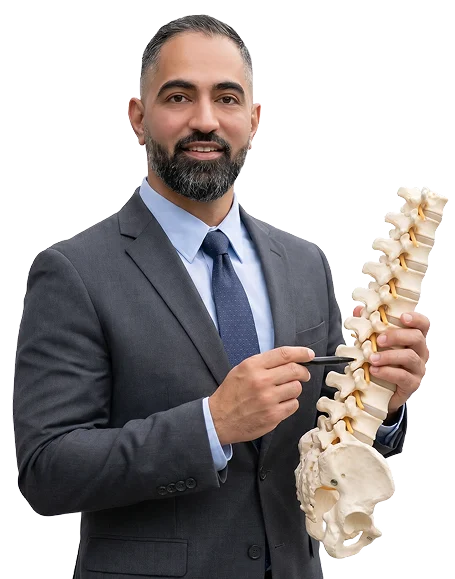
Myofascial pain treatment aims to ease persistent muscle pain caused by trigger points: tight, tender knots that can also send pain elsewhere, such as into the head or leg. Dr Jawaad Malik, Consultant in Pain Medicine and Anaesthesia, offers myofascial pain syndrome treatment that starts with exercise and physiotherapy, adding ultrasound-guided trigger point injections where suitable, in Windsor, Woking, Chertsey, Guildford and Wexham.
| Question | Answer |
|---|---|
| What is treated? | Trigger point pain in the neck, shoulders, back, buttock, abdominal or chest wall |
| Who assesses me? | Dr Jawaad Malik, NHS consultant at Ashford and St Peter’s Hospitals |
| How are trigger points found? | Muscle examination, with ultrasound in clinic |
| What comes first? | Stretching, exercise and physiotherapy |
| How long is an injection session? | Around 15 to 30 minutes, as a day case |
| Where? | Windsor, Woking, Chertsey, Guildford or Wexham |
What Is Myofascial Pain Syndrome?
Myofascial pain syndrome is long-lasting muscle pain caused by trigger points: small, tight bands or “knots” that fail to relax and feel sore when pressed. “Myofascial” refers to the muscle and the fascia, the thin connective tissue around it. Pain can be felt at the knot or further away, which is called referred pain.
Referred pain can imitate other problems, so Dr Malik first confirms the muscle really is the source. He holds the Certified Interventional Pain Sonologist (CIPS) qualification, and this care sits within his wider pain medicine service.
Symptoms and Referred Pain From Trigger Points
Expect a persistent ache with one or more tender spots. Pressing a trigger point often reproduces your usual pain, and some people notice stiffness or less movement.
| Trigger point area | Where you may feel pain |
|---|---|
| Trapezius and back of the neck | Neck, shoulder and head (headache) |
| Muscles beside the lower spine | Lower back |
| Gluteal muscles and piriformis | Buttock, sometimes down the leg |
| Between the ribs (intercostal) | Chest wall |
When Is Muscle or Chest-Wall Pain Urgent?
| Symptom | What it could be | What to do |
|---|---|---|
| Sudden chest pain or pressure that does not go away | Possible heart attack | Call 999 |
| Chest pain spreading to an arm, neck, jaw or back, or with sweating or breathlessness | Possible heart attack | Call 999 |
| A headache that started suddenly and is extremely painful | Possible serious cause | 999 or A&E |
| Redness, warmth or fever after an injection | Possible infection | Same-day GP or NHS 111 |
The NHS chest pain page lists muscle strain as one cause, but chest-wall pain should only be treated as muscular once a heart or lung cause has been excluded.
Trigger Point Problems Dr Malik Treats
- Neck and shoulder trigger points: in the trapezius, which can cause headaches; see headache treatment.
- Lower back muscle pain: paraspinal trigger points; disc and joint causes sit under back pain treatment.
- Piriformis syndrome: buttock pain that can mimic sciatica, which is checked for first.
- Intercostal myofascial pain: between the ribs, after other chest causes are ruled out.
- Muscle pain after an injury: lasting pain after a strain or fall; see sports injury treatment.
- Myofascial pain with fibromyalgia: trigger points on top of chronic widespread pain.
What Causes Trigger Points?
Trigger points can follow an injury, overuse or postural strain, or appear as the nervous system becomes more sensitive to pain. Poor sleep can worsen pain, and relaxing reduces muscle tension.
How Dr Malik Assesses Myofascial Pain
Myofascial pain treatment begins with examination: pressing along the muscle shows whether a spot reproduces your pain and where it spreads.
- History: where it hurts, what sets it off and what you have tried.
- Examination: for active and latent trigger points, plus movement.
- Ultrasound: confirms the target before any needle.
- Look-alikes: joint, disc and nerve causes are excluded using any MRI or X-ray reports.
- Your GP: sends a letter with the diagnosis and plan.
Treatment Options for Myofascial Pain
Each option covers what it is, how it may help, who it may suit and what to weigh up. Injections are only one part of interventional pain medicine.
Exercise, Stretching and Physiotherapy
Graded stretching and strengthening, often with a physiotherapist, may reduce flare-ups and suits almost everyone. National guidance advises supervised group exercise for chronic primary pain.
Sleep, Stress and Psychological Support
Dr Malik's biopsychosocial approach looks at sleep, mood and work as well as the muscle. National guidance suggests considering acceptance and commitment therapy or cognitive behavioural therapy for long-term pain.
Trigger Point Injections
Local anaesthetic, with or without a corticosteroid (an anti-inflammatory steroid), is injected into each trigger point under ultrasound. Pain relief should start within 15 minutes and may last a few hours to a few months. National guidance advises that steroid or local anaesthetic and steroid trigger point injections should not be started for chronic primary pain, meaning pain with no clear underlying cause; Dr Malik explains how this applies to you if relevant.
Ultrasound-Guided Dry Needling
A fine needle goes into the trigger point with no medicine, aiming to release the tight band. It may suit people avoiding steroid. National guidance suggests considering a single course of acupuncture or dry needling for chronic primary pain, within limits on setting and cost.
Botulinum Toxin Injections
A prescription-only medicine whose use for trigger points is off-label in the UK. It is considered only after other treatments fail, with separate consent about uncertain benefit.
Why Patients Choose Dr Malik for Trigger Point Pain
- Ultrasound training: CIPS certification, and he teaches ultrasound courses for doctors.
- Examination before needles: injections only where the muscle looks like the source.
- Whole-person care: sleep, activity and stress are part of the plan.
- Languages: English, Hindi, Urdu or Punjabi.
- Feedback: verified patient reviews on Doctify.
- Recognised expertise:
- NHS consultant, Ashford and St Peter’s Hospitals; Honorary Consultant, St George’s Hospital, London
- Postnominals FFPMRCA, FRCA, EDRA and CIPS, with pain fellowships at Charing Cross and Imperial
What Happens During a Trigger Point Injection Appointment
- Consultation: around 30 minutes; self-pay patients need no referral.
- Consent: benefits, risks and alternatives, including exercise alone or no injection.
- On the day: the skin is cleaned, ultrasound shows the muscle, and several trigger points can be treated in one visit.
- Time: around 15 to 30 minutes; home the same day.
- Follow-up: stretching advice and a short review.
Tell the team beforehand about blood thinners, diabetes or an infection.
Recovery, Aftercare and Risks of Trigger Point Injections
Rest for the day, avoid heavy work or hard exercise for a few days, and arrange a lift home. Soreness typically settles within 24 to 48 hours; any steroid can take a week or two to work.
- No change: the injection may not help.
- Flare or infection: each affects around 1 in 100 people; bleeding is rarer.
- Bruising, numbness or dizziness: usually short-lived.
- Steroid effects: flushing, a brief blood sugar rise in diabetes, period changes, skin thinning or lightening.
- Chest-wall needles: lung puncture (pneumothorax) for injections between the ribs.
Where Dr Malik Sees Patients With Muscle Pain
| Hospital | Address | When Dr Malik is there |
|---|---|---|
| The Princess Margaret Hospital, Windsor | Osborne Road, Windsor SL4 3SJ | Tuesday morning (8–12), Thursday evening (6:45–8), Saturday morning (9–12) |
| Nuffield Health Woking Hospital | Shores Road, Woking GU21 4BY | Monday afternoon (2–6), Wednesday evening (6:45–8), Saturday morning (9–1) |
| Spire Thames Valley Hospital | Wexham Street, Wexham, Buckinghamshire SL3 6NH | All day Monday (9–6) |
| The Runnymede Hospital, Chertsey | Guildford Road, Chertsey KT16 0RQ | Tuesday afternoon (2–5:30) |
| Mount Alvernia Hospital, Guildford | Harvey Road, Guildford GU1 3LX | One Thursday a month (2–8pm) |
Spire Thames Valley houses the main office, and the injection site is confirmed when you book. Out of hours, ring NHS 111, or 999 in an emergency.
Trigger Point Injection Fees and Insurance
Myofascial pain syndrome treatment costs vary by hospital and by whether injections are needed; your 2026 fees are set out in writing before anything is booked.
| Appointment | Fee |
|---|---|
| First consultation | Confirmed in writing when you book |
| Follow-up review | Quoted by the practice |
| Trigger point injection | Quoted after assessment, with hospital charges |
- Self-pay: book without a GP letter.
- Insured: most major insurers accepted; some ask for a GP referral, so check your policy.
FAQs About Myofascial Pain and Trigger Points
What is the difference between myofascial pain and fibromyalgia?
Myofascial pain centres on trigger points in particular muscles. Fibromyalgia causes pain all over the body, often with tiredness, poor sleep and concentration (chronic primary pain).
What does a trigger point feel like?
Usually a tender knot or tight band in the muscle. Pressing it often sets off the familiar pain, which may spread, for example from the shoulder into the head. Several trigger points in one area are common.
Can trigger points cause headaches?
Yes. Trigger points in the trapezius and neck muscles can refer pain into the head, and Dr Malik checks for them. A sudden, extremely painful headache needs 999 or A&E, not a clinic.
Are trigger point injections painful?
You may feel a sting or some discomfort, and local anaesthetic is part of the injection. The area can feel bruised for a day or two; see how long local anaesthesia lasts.
How quickly do trigger point injections work?
The local anaesthetic often eases pain during the same visit, while any steroid acts over a week or two. How long relief lasts varies between people, so Dr Malik reviews it with you.
How many trigger point injections might I need?
It depends on how many trigger points are found; several can be treated in one session. Any repeat is decided at your review, based on how much the first treatment helped.
What is the difference between dry needling and a trigger point injection?
Both place a fine needle into the trigger point. An injection delivers local anaesthetic, sometimes with steroid; dry needling uses the needle alone. Dr Malik explains which suits your muscles and health.
Is botulinum toxin used for myofascial pain?
Occasionally. It is prescription-only and off-label for trigger points in the UK, so Dr Malik considers it only when other treatments have not helped, after explaining the uncertain benefit and side effects.
Can I exercise after a trigger point injection?
Gentle movement is fine, but avoid hard exercise or heavy work for the first few days. Stretches start once soreness eases, because exercise remains a core part of treatment.
Can myofascial pain go away on its own?
Muscle pain after a strain often improves with self-care; most strains feel better after 2 weeks. Pain lasting over 3 months counts as chronic and is worth assessing if it limits you.