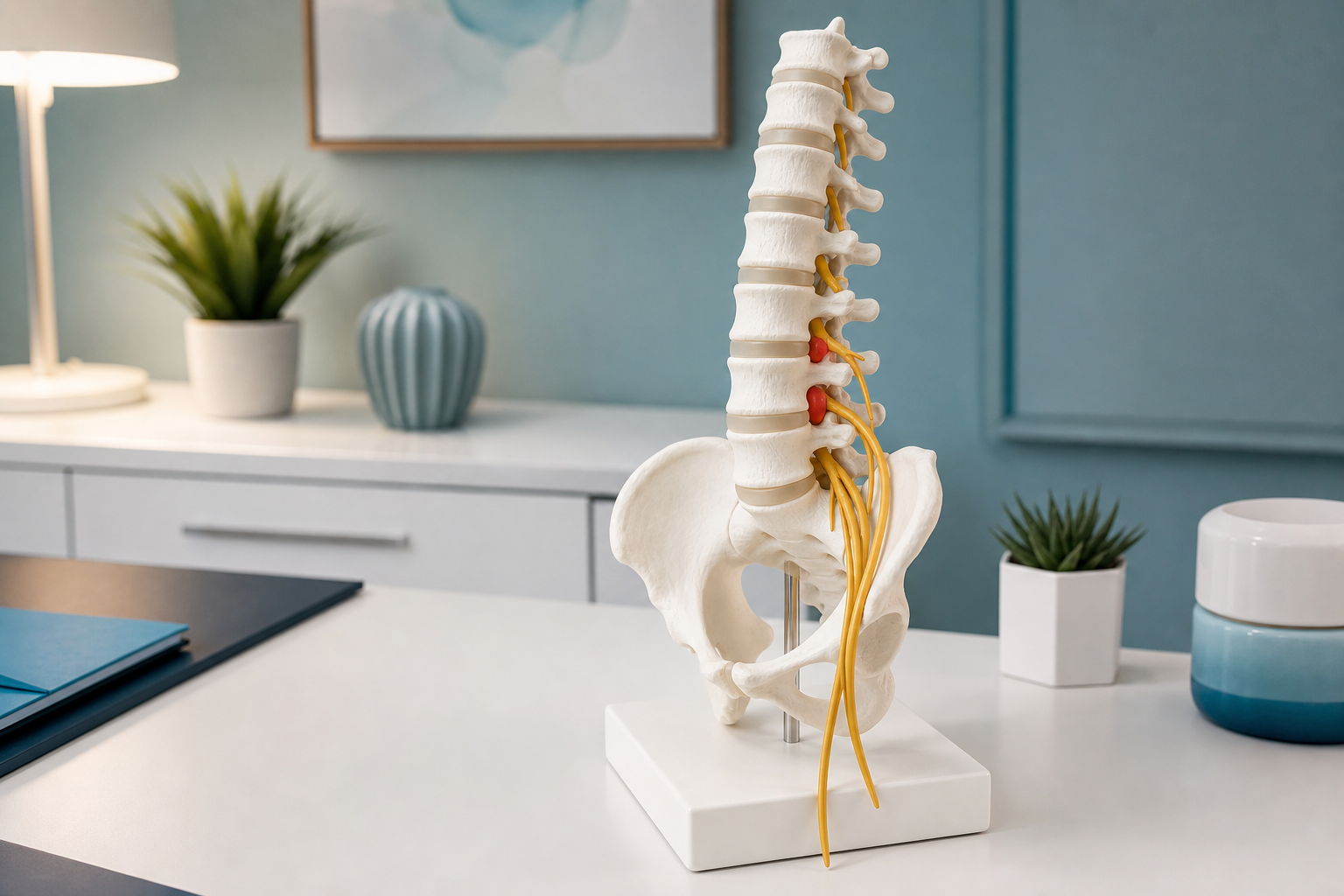
Will sciatica go away on its own? For many people, the answer is yes — but it depends on the underlying cause, the severity of your symptoms, and how your body responds over time. Most mild to moderate cases of sciatica do improve with rest, gentle movement, and conservative care within a few weeks to a few months. However, some people experience persistent or worsening symptoms that benefit from specialist assessment and targeted treatment.
Dr Jawaad Malik is a consultant pain management physician serving patients in Windsor, Guildford, and the surrounding areas. With specialist expertise across pain medicine, interventional procedures, and regenerative orthopaedics, Dr Malik helps patients understand their sciatica and find the most appropriate path to recovery.
What Is Sciatica and What Causes It?
Sciatica refers to pain that travels along the path of the sciatic nerve — the longest nerve in the body, running from the lower back through the hips and buttocks and down each leg. It is not a diagnosis in itself, but rather a symptom of an underlying issue affecting the nerve.
Common causes include:
- A herniated or slipped disc pressing on the nerve root
- Spinal stenosis (narrowing of the spinal canal)
- Piriformis syndrome, where a muscle in the buttock irritates the nerve
- Degenerative disc disease
- Spondylolisthesis (a vertebra slipping out of position)
Understanding the cause is important because it shapes the treatment approach. According to NHS guidance on sciatica, most cases improve within four to six weeks, though some can last longer.
Will Sciatica Go Away on Its Own Without Treatment?
In many cases, sciatica does resolve without medical intervention. The body has a natural ability to reduce inflammation and allow irritated nerve tissue to settle. Mild sciatica — particularly when caused by a herniated disc — often improves with time, gentle activity, and over-the-counter pain relief.
When Might Sciatica Resolve on Its Own?
Sciatica is more likely to improve without specialist treatment when:
- Symptoms are mild and manageable
- Pain is intermittent rather than constant
- There is no significant weakness or numbness in the leg or foot
- Symptoms began recently following a specific movement or activity
When Should You Seek Professional Help for Sciatica?
Sciatica that does not improve — or that worsens — warrants professional assessment. You should seek advice from a clinician if:
- Pain has persisted for more than six weeks
- You experience significant weakness in the leg or foot
- Numbness or tingling is spreading or worsening
- Pain is severely affecting your sleep, mobility, or daily life
- You develop any loss of bladder or bowel control — this requires urgent medical attention
If you experience sudden loss of bladder or bowel control alongside back or leg pain, please seek emergency medical care immediately, as this may indicate a serious condition called cauda equina syndrome.
What Treatment Options Are Available for Sciatica?
When sciatica does not resolve on its own, there are several evidence-based treatment options that may help. The most appropriate approach depends on the cause and severity of your symptoms.
Conservative and Self-Management Approaches
Initial management often includes staying as active as possible, applying heat or ice, and taking appropriate pain relief as advised by a pharmacist or GP. Physiotherapy can also play an important role in improving posture, core strength, and flexibility.
Interventional Pain Treatments
For persistent or more severe sciatica, interventional procedures may be recommended. Dr Jawaad Malik specialises in a range of minimally invasive treatments, including:
- Nerve block injections — targeted injections to reduce nerve inflammation and pain
- Epidural steroid injections — delivering anti-inflammatory medication close to the affected nerve root
- Facet joint injections — addressing pain arising from the spinal joints
- Neuromodulation therapy — for complex or chronic nerve pain that has not responded to other treatments
- Regenerative orthopaedic treatments — to support tissue healing and reduce inflammation
These procedures are performed using image guidance to ensure precision and safety. Dr Malik holds the Certified Interventional Pain Sonologist (CIPS) qualification — an elite certification awarded by the World Institute of Pain — placing him among a select group of interventional pain specialists worldwide.
How Long Does Sciatica Typically Last?
The duration of sciatica varies considerably from person to person. Acute sciatica often settles within four to twelve weeks. Chronic sciatica — lasting longer than twelve weeks — is less common but does occur, particularly when an underlying structural issue remains unaddressed.
Early, appropriate management can help prevent acute sciatica from becoming a longer-term problem. If you are unsure how long your symptoms have been present or whether they are improving, a specialist consultation can provide clarity and direction.
Taking the Next Step
Will sciatica go away on its own? Often, yes — but not always, and not for everyone. If your symptoms are persisting, worsening, or significantly affecting your quality of life, it is worth seeking a professional opinion rather than waiting and hoping for improvement.
Dr Jawaad Malik offers specialist consultations for sciatica and back pain in Windsor and Guildford. To discuss your symptoms and explore the treatment options available to you, book a consultation with Dr Jawaad Malik today.